

Protagonist / Antagonist
Julia
Age
Late 20s – Early 30s
Occupation
Research Scientist, Northland Mining
Archetype
The Survivor / The Fallen Hero
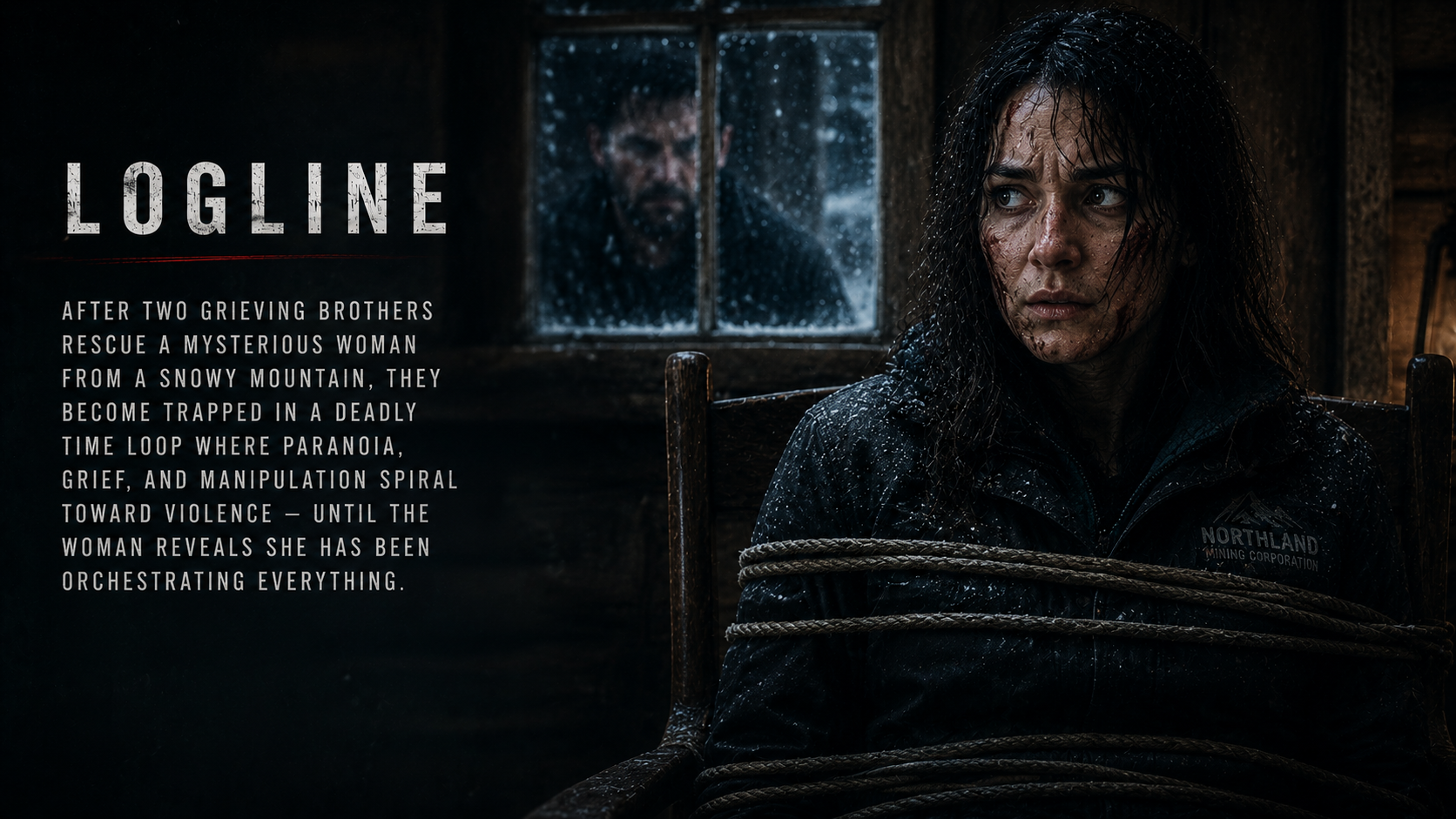
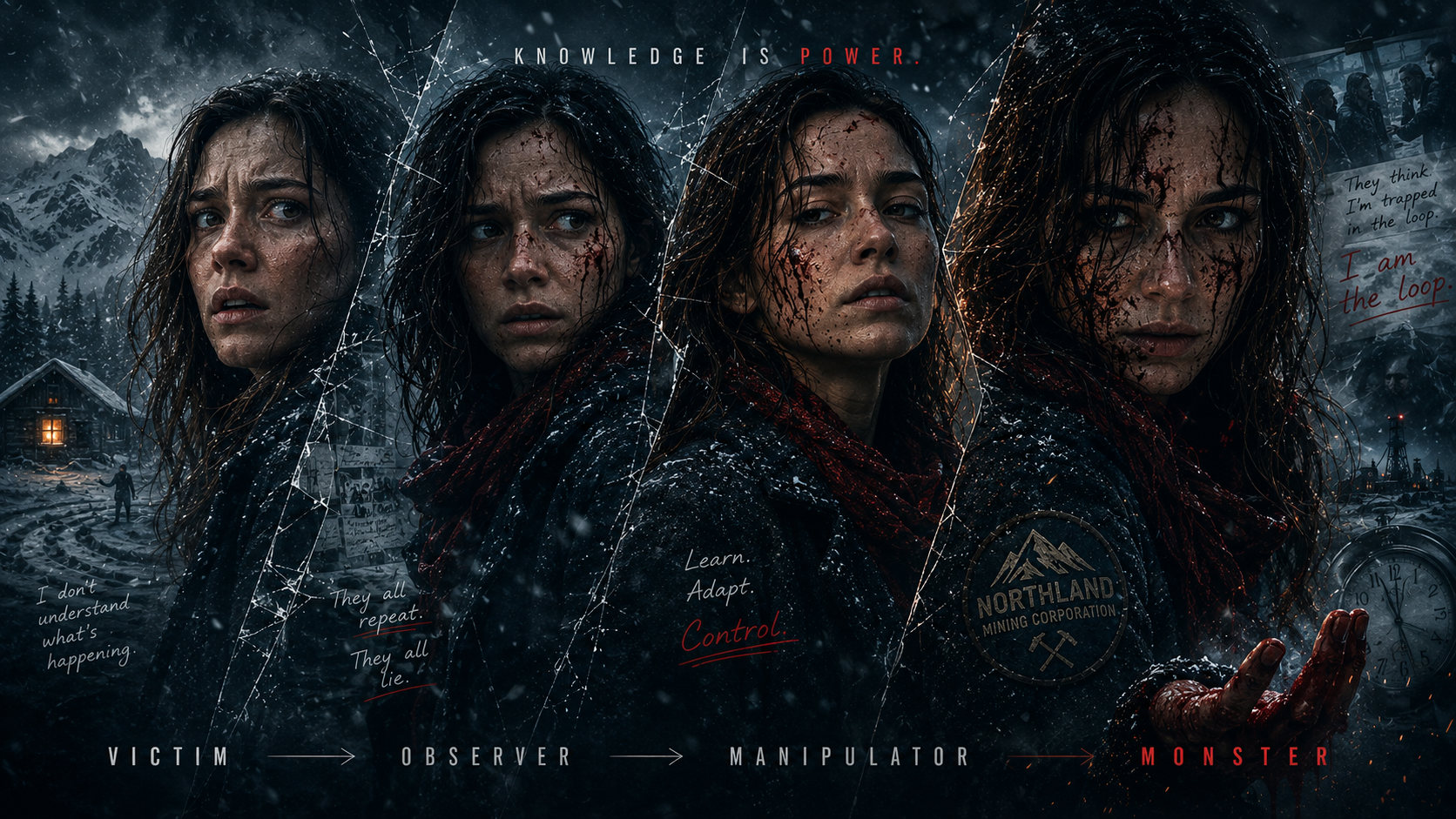
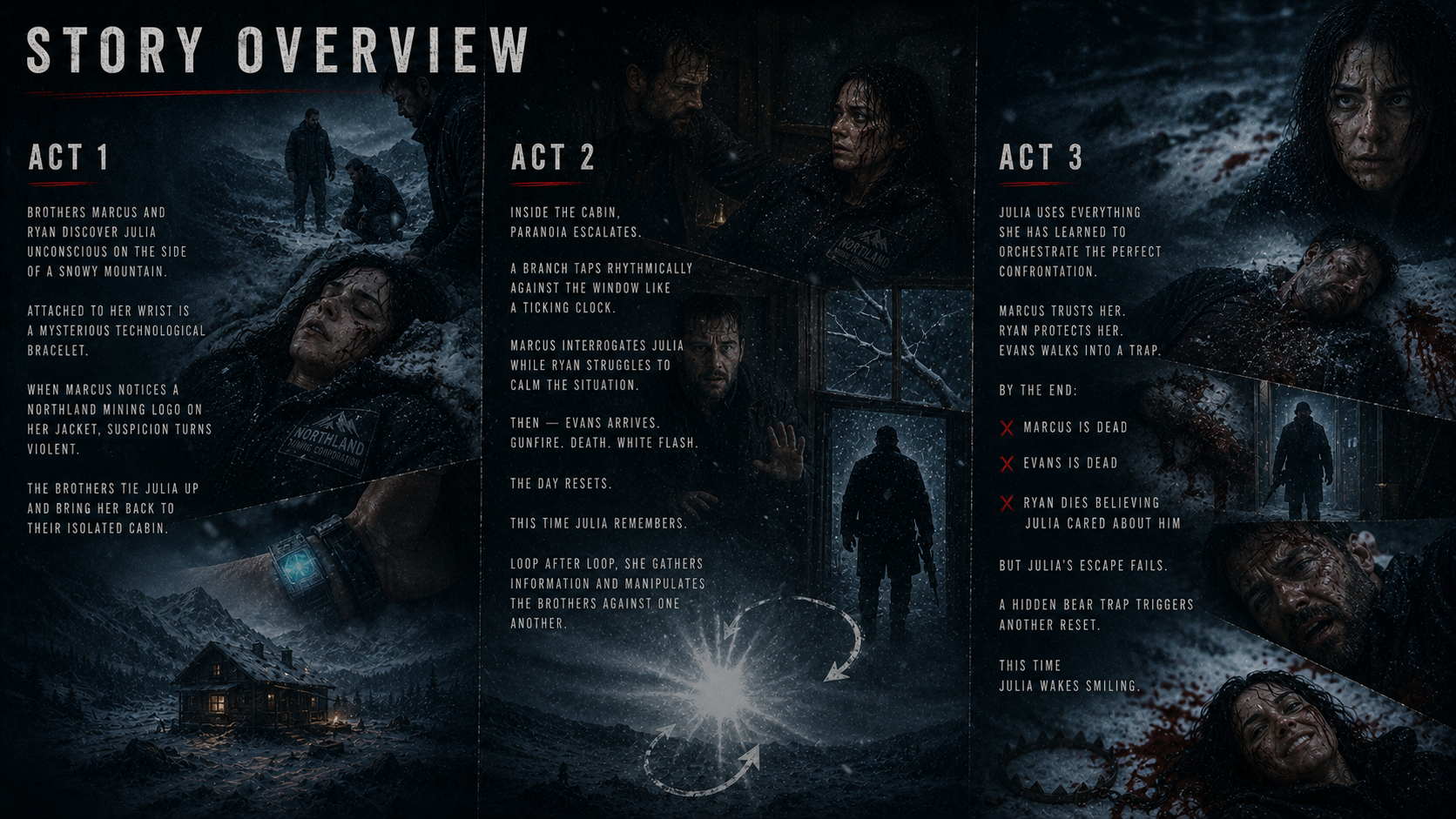
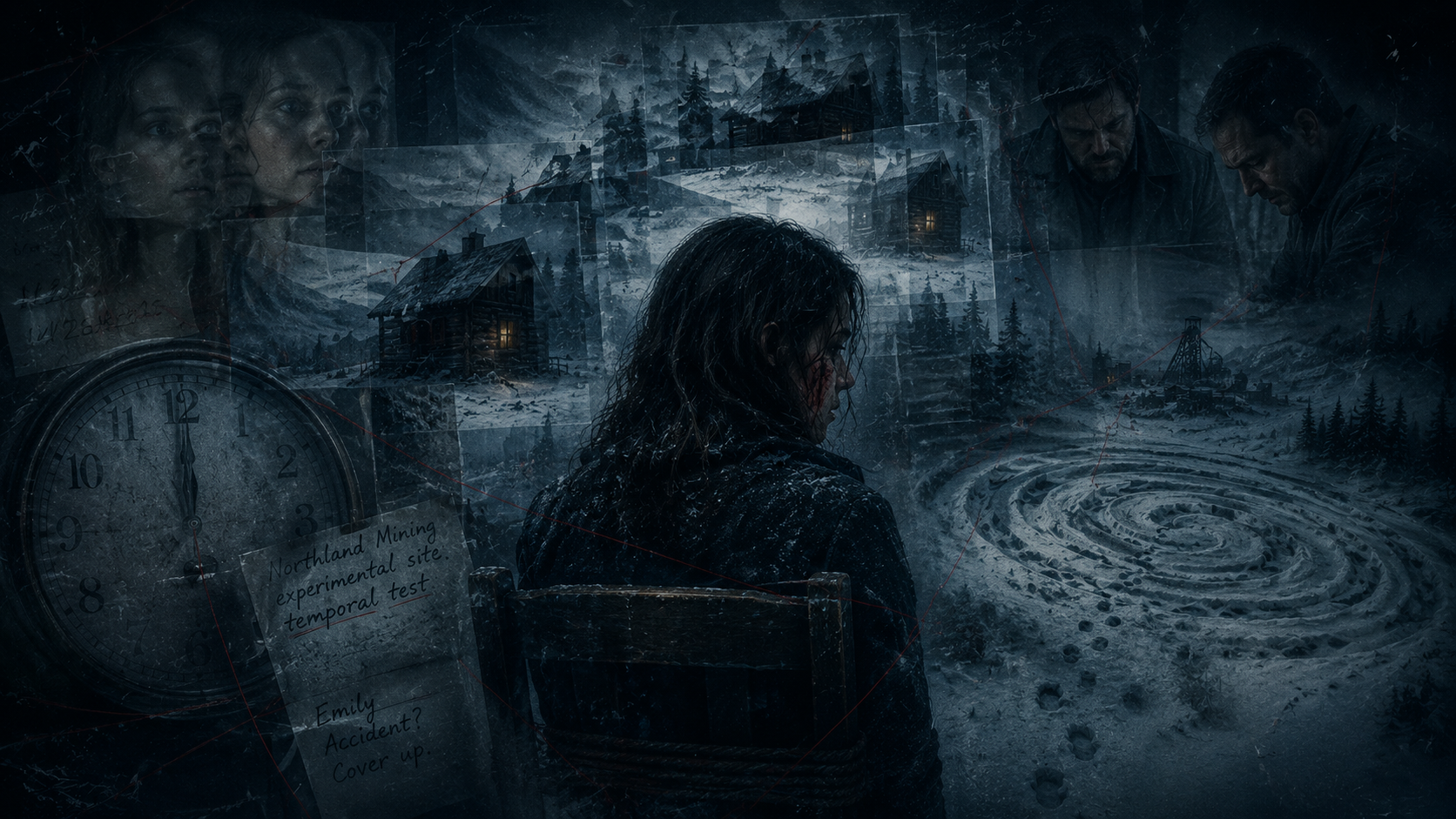
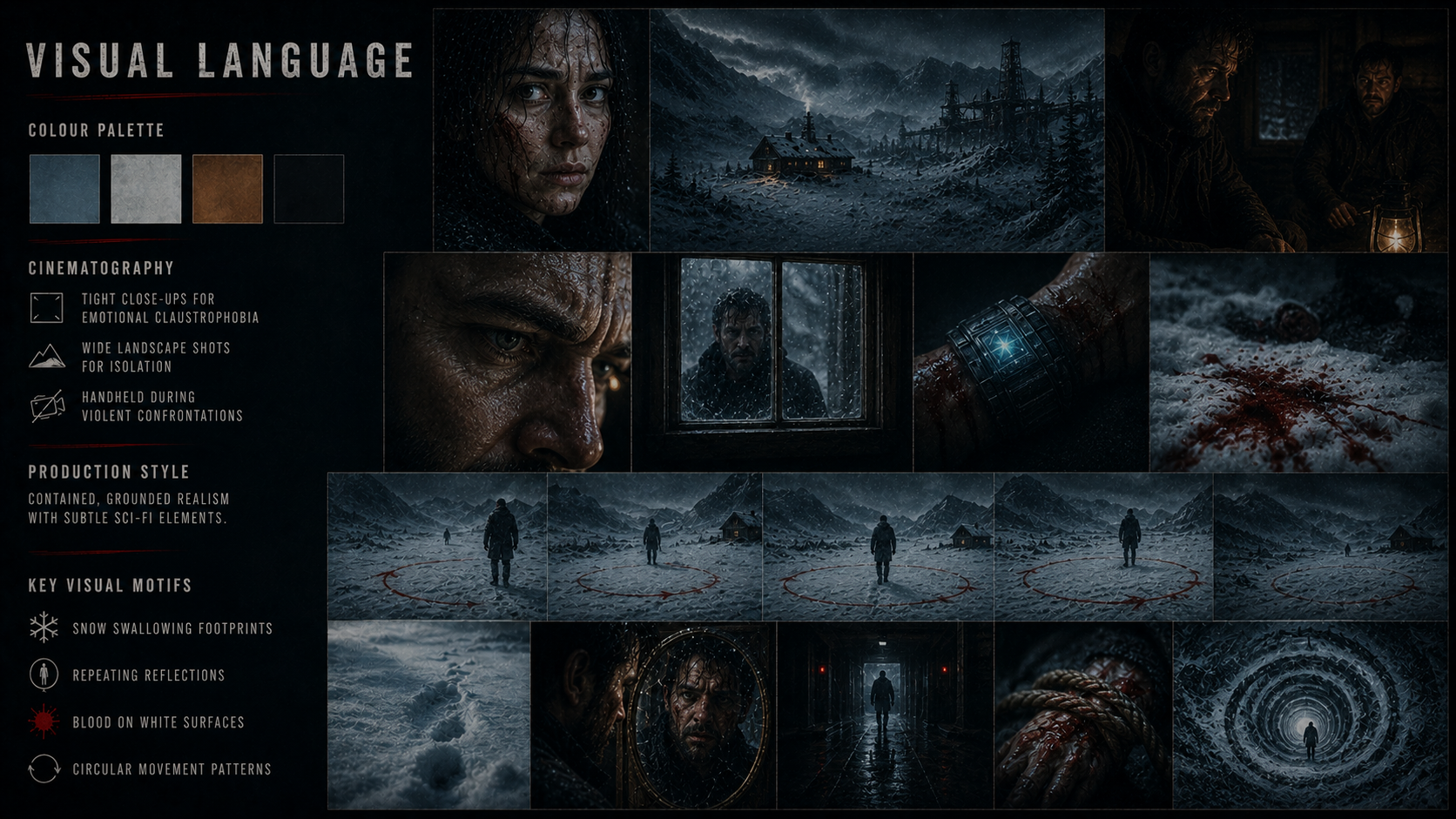
Julia is introduced as a frightened stranger found unconscious on a snow-covered mountainside. With no apparent way to explain her presence and accused of working for the mining company responsible for a local tragedy, she finds herself tied to a chair and interrogated by two isolated brothers.
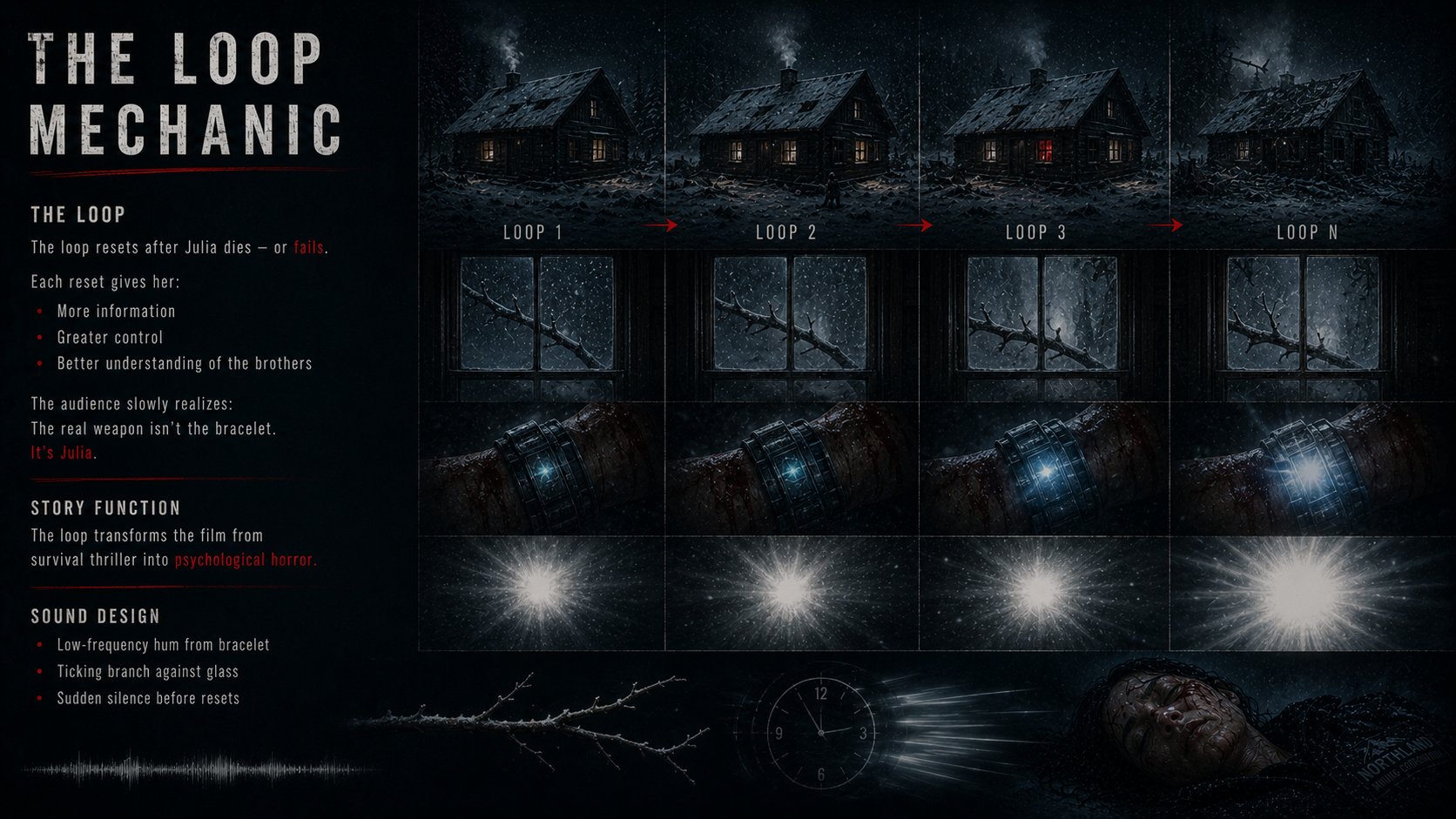
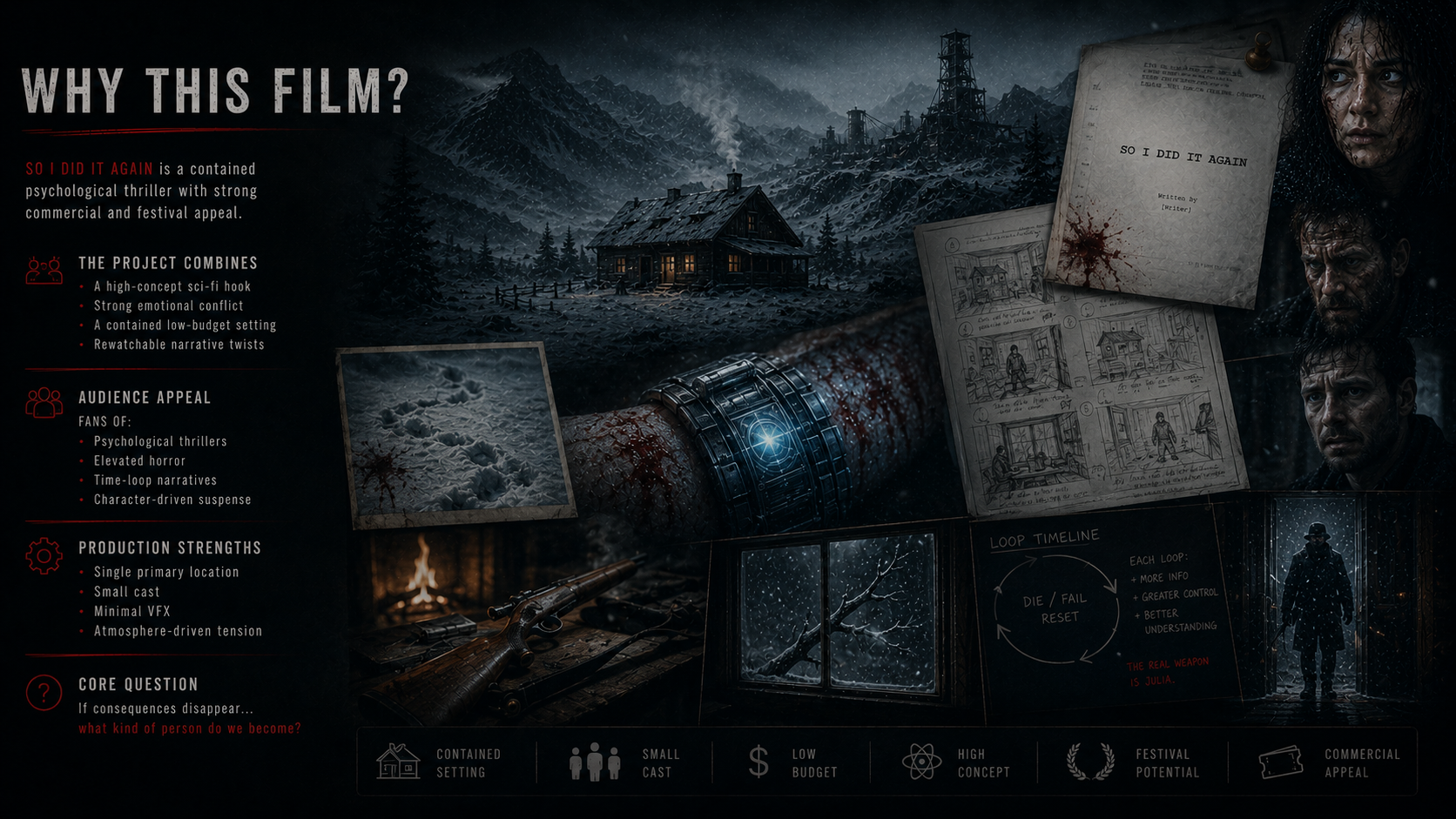
Unknown to them, Julia is trapped within a temporal anomaly. Every time she dies, the day begins again—but only she retains the memories of each previous loop. Initially driven by fear and a desperate desire to survive, Julia gradually discovers that knowledge is the only currency that matters. Every failed attempt teaches her something new about the people around her. Every conversation becomes intelligence gathering. Every death becomes another lesson. By the time the story reaches its climax, Julia is no longer simply trying to escape the loop—she has learned how to control it.
Personality
Initially
At the beginning of the story, Julia is compassionate, rational, and deeply empathetic. She attempts to reason with Marcus and Ryan, believing honesty and cooperation will earn their trust.
As loops continue
As the loops continue, those qualities begin to erode. Repeated trauma forces Julia to detach emotionally from the people around her. Their deaths become inevitable, predictable, and eventually insignificant. She learns that emotion clouds judgement, while information creates opportunity. Rather than reacting to events, Julia begins orchestrating them.
By the final act
By the final act she speaks with confidence, manipulates conversations with precision, and uses each character's fears, guilt, and desires against them. The audience slowly realises the woman they wanted to survive has become the most dangerous person in the room.
Initial Motivation
Survive. She wants to escape the cabin, avoid Evans, and return home.
As the loops progress
As she gains control over each loop, Julia becomes addicted to certainty. The unknown disappears, replaced by predictability and manipulation. Breaking the cycle is no longer enough—she wants to control every variable within it. Her greatest strength ultimately becomes her greatest flaw.
Internal Conflict
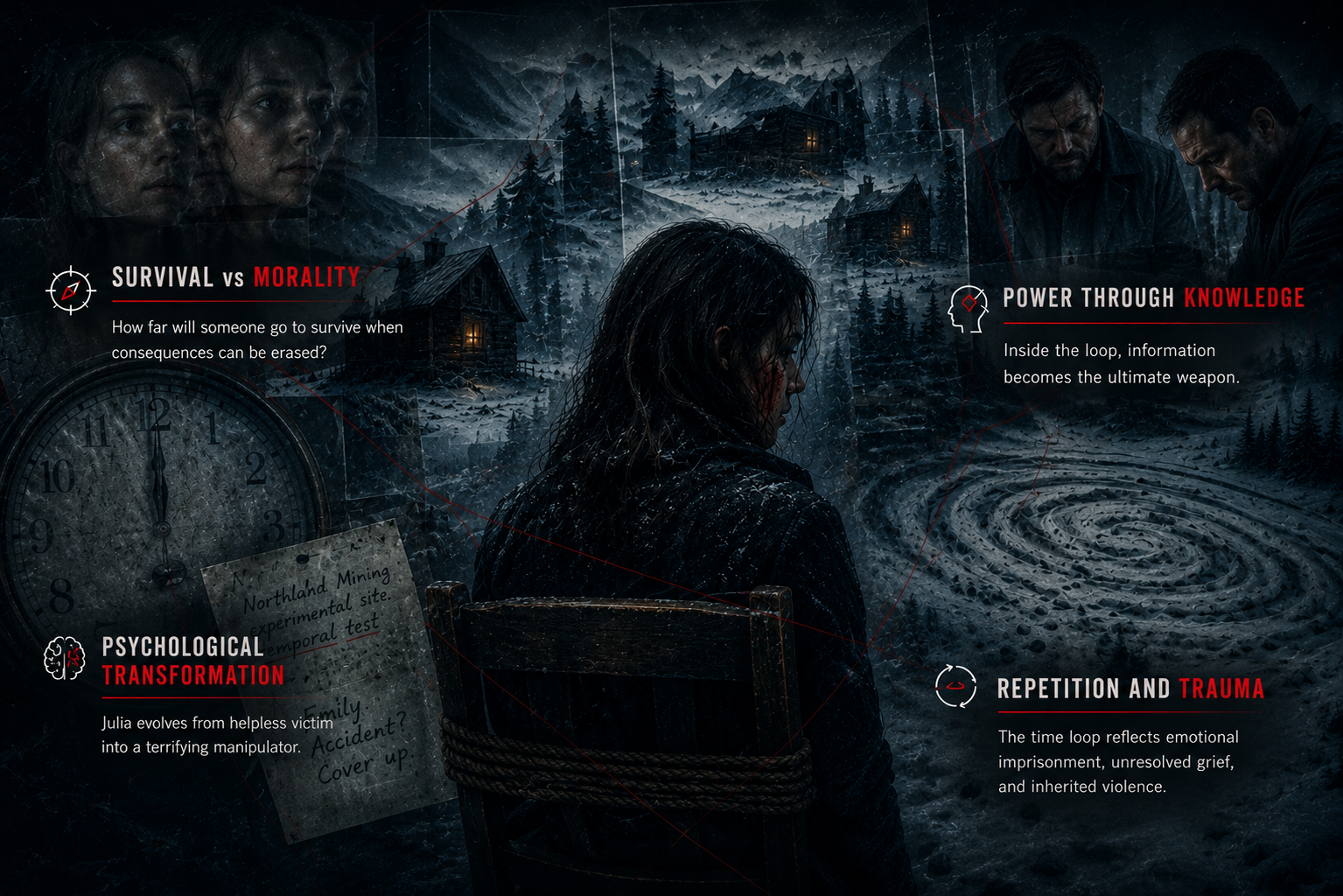
Julia constantly battles two versions of herself. One wants to remain compassionate. The other understands compassion gets people killed. Each reset forces her to choose between morality and survival, and every choice pushes her further from the person she once was. By the conclusion, she no longer questions whether sacrificing others is wrong. She only questions whether it will work.
External Conflict
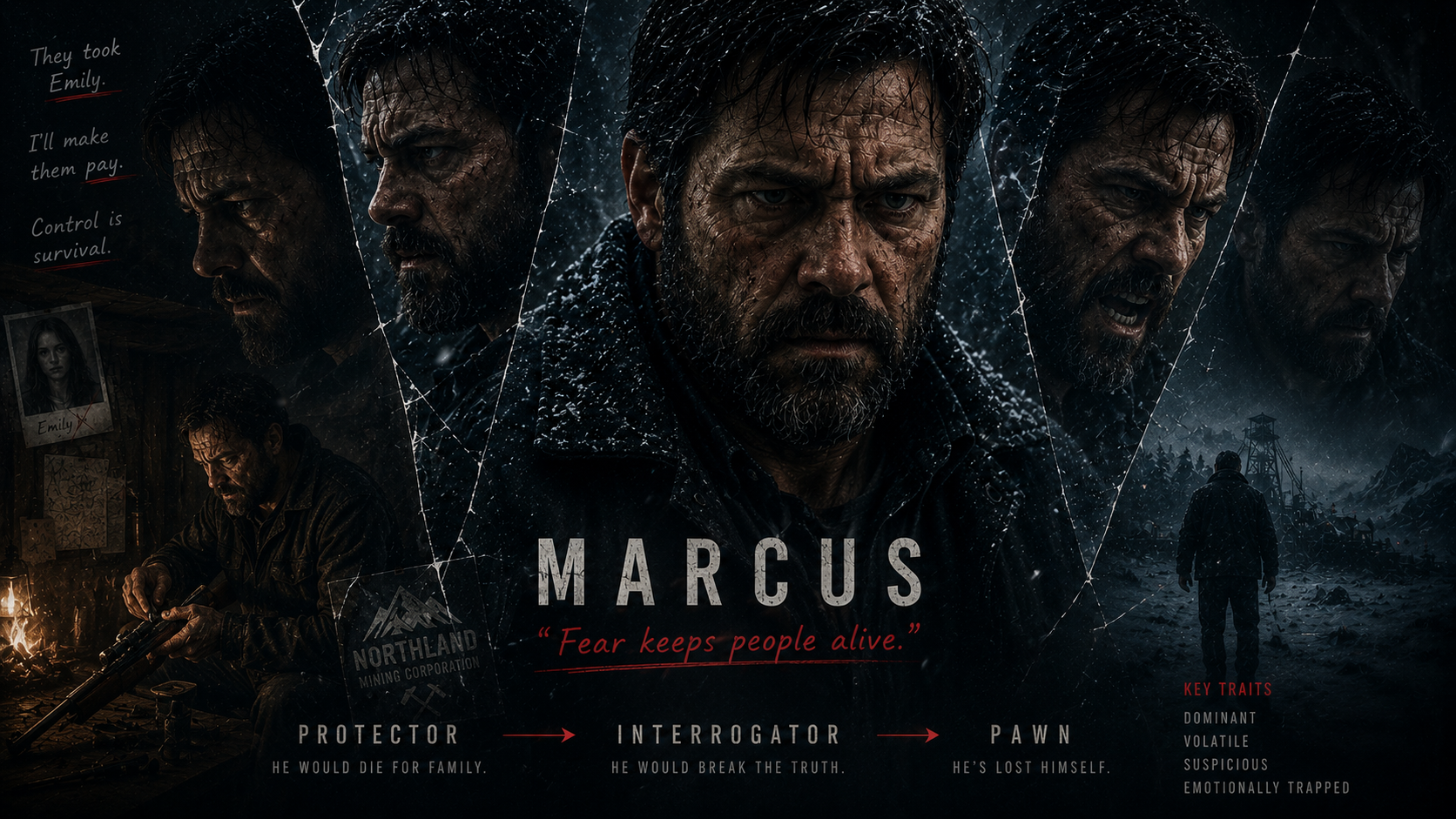
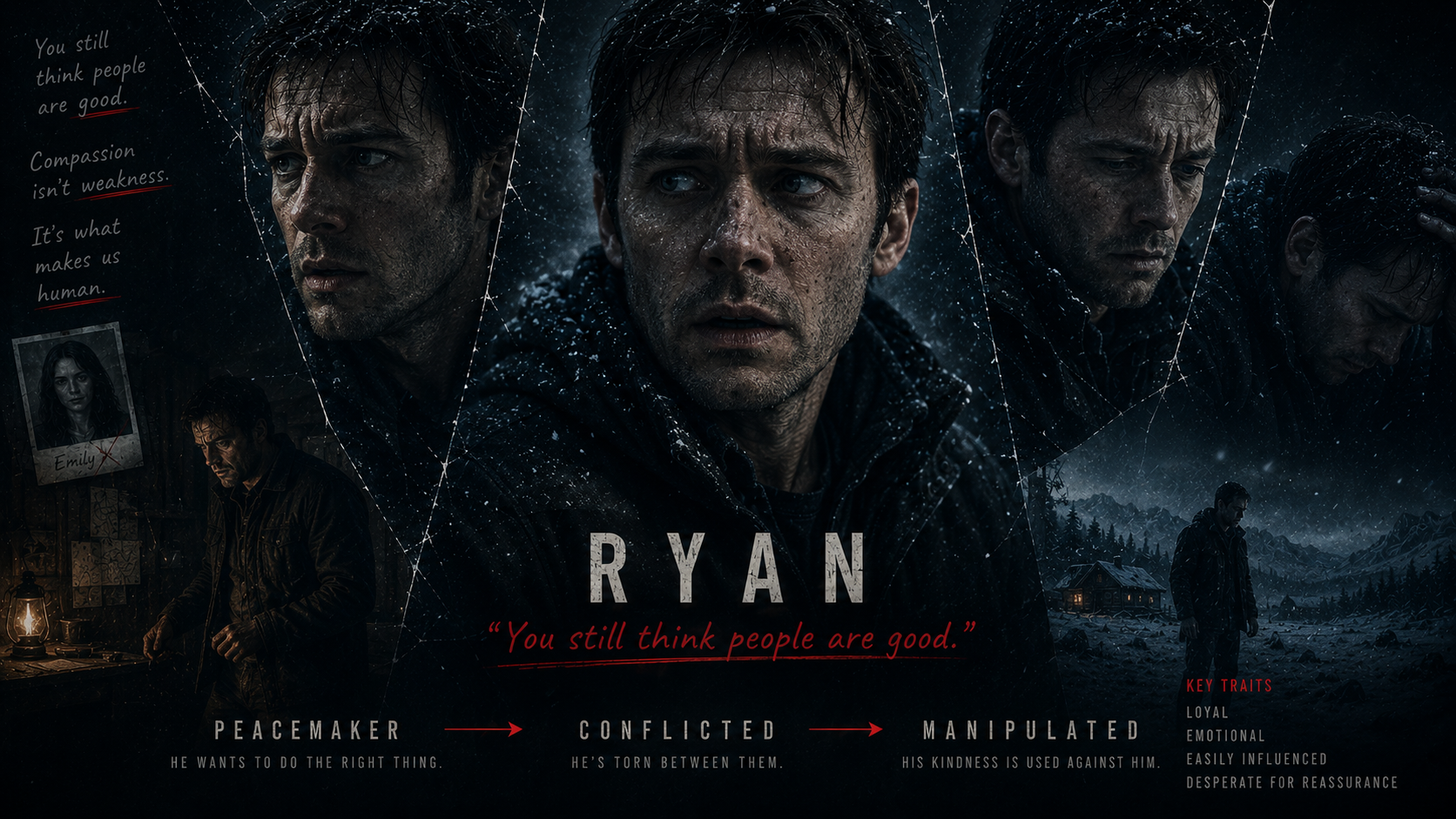
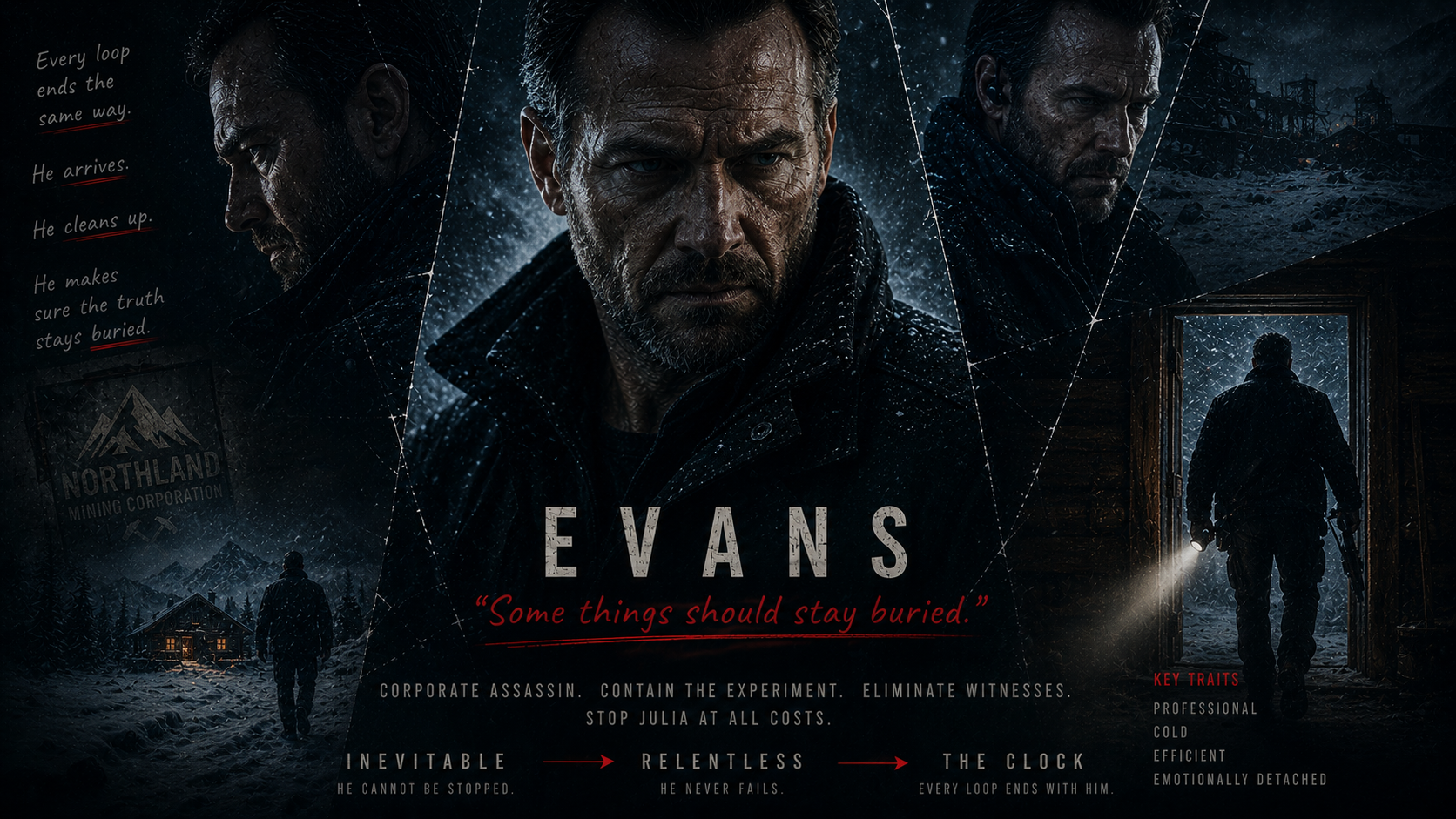
Julia faces threats from every direction. Marcus believes she is connected to the corporation responsible for his sister's death. Ryan wants to believe her but lacks the confidence to challenge his brother. Evans represents an unstoppable force—an assassin whose arrival marks the end of every loop. The cabin itself becomes another antagonist; isolated, unforgiving, and impossible to escape. The time loop ensures every mistake carries consequences, forcing Julia to relive failure until she learns from it.
Character Arc
Beginning
- Frightened
- Honest
- Compassionate
- Desperate for help
Middle
- Observant
- Analytical
- Increasingly manipulative
- Learns to exploit emotional weaknesses
End
- Calm
- Ruthless
- Strategic
- Emotionally detached
Transformation
Victim → Survivor → Strategist → Manipulator → Monster
Strengths
- Highly intelligent and analytical
- Exceptional observational skills
- Learns rapidly from failure
- Adaptable under extreme pressure
- Emotionally resilient
- Thinks several steps ahead
Weaknesses
- Trusts too easily in the beginning
- Carries immense psychological trauma
- Increasing willingness to manipulate others
- Loses empathy through repetition
- Believes control is the answer to every problem
Relationships
Marcus
Marcus initially represents Julia's greatest obstacle. His hatred of Northland blinds him to reason, making him impossible to persuade through logic alone. Julia eventually discovers that beneath his anger lies unresolved grief, allowing her to weaponise his love for Emily against him.
Ryan
Ryan is the easiest person for Julia to understand. Kind-hearted yet emotionally immature, Ryan desperately wants to help but lacks the confidence to oppose Marcus. Julia recognises this vulnerability and slowly transforms his compassion into unquestioning obedience.
Evans
Evans is more than an antagonist. He represents inevitability. No matter how many times Julia changes events, his arrival appears unavoidable. He is the constant reminder that some outcomes cannot simply be reasoned away.
Core Theme
“If consequences disappeared, what kind of person would we become?”
The time loop does not change Julia overnight. It simply removes accountability. With every reset, she discovers that knowledge grants power, power grants control, and control slowly strips away her humanity.
Defining Quote
“Knowledge is power.”
Story Foundry Development Notes
Julia was designed around the principle that compelling characters are defined by transformation rather than circumstance. Her journey demonstrates Story Foundry's character-first approach to screenwriting, where every decision, relationship, and conflict is shaped by a clear emotional arc. Through layered motivations, escalating stakes, and a gradual moral descent, Julia evolves from someone audiences instinctively root for into the very force they fear, illustrating how a strong character arc can become the emotional engine of an entire story.